Onboarding rarely fails in one obvious moment. It slips in the gaps: an access request that sits unapproved, a document the new hire cannot find, a manager who assumes IT has already set up an account, or a first project that stalls because nobody owns the introduction. Each gap looks small, but together they delay the day a new person actually starts contributing.
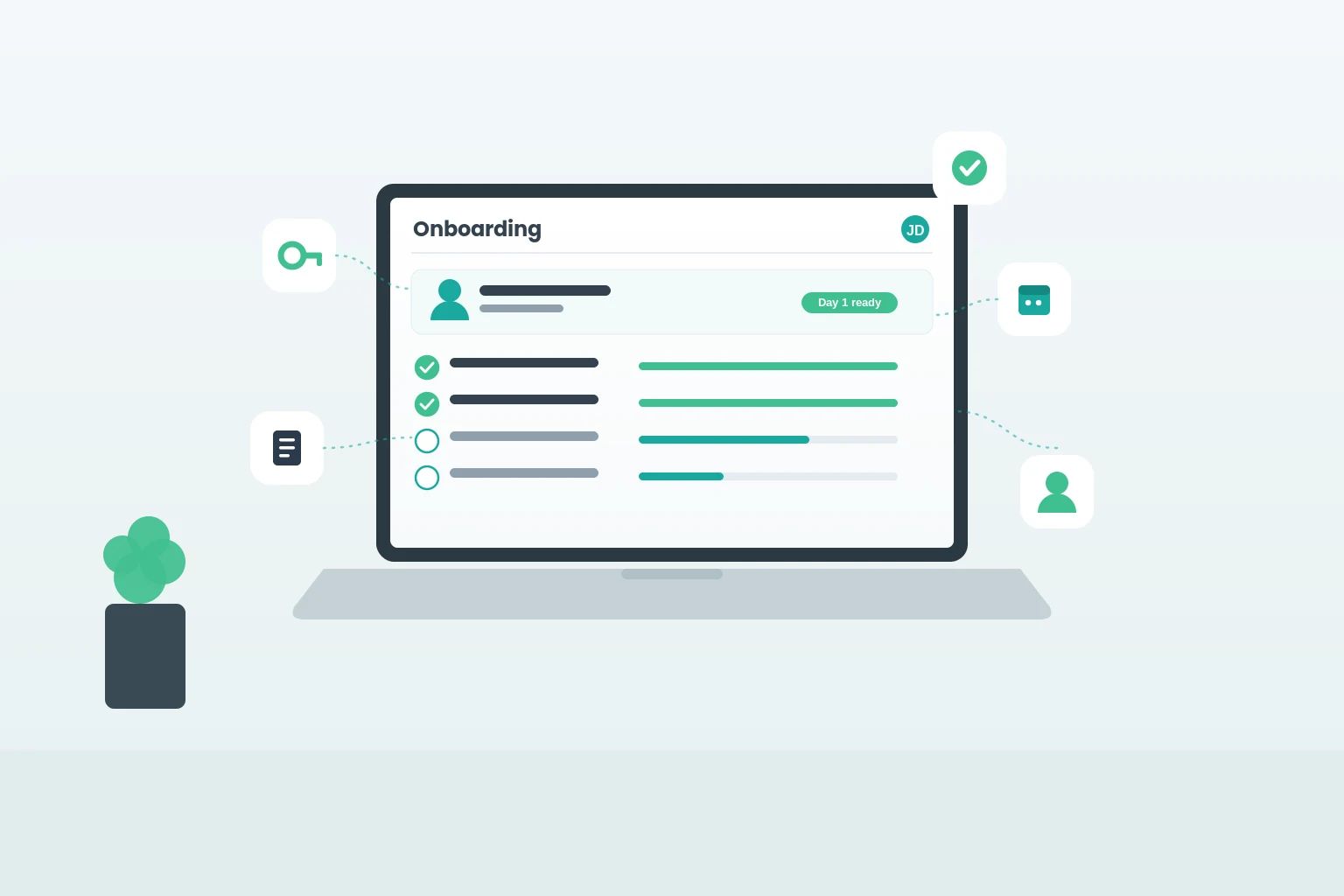
Connected onboarding closes those gaps by treating the first weeks as one shared workflow rather than a scattered checklist. When tasks, access, documents, and ownership stay attached to the same record, new hires spend less time waiting and more time learning the work they were hired to do.
A good start is an operations problem, not a paperwork problem
It is tempting to treat onboarding as a list of forms to complete before someone is officially set up. In practice, a strong start depends on coordination across people, IT, finance, and the hiring team. Equipment has to be ordered, accounts provisioned, approvals cleared, and context handed over. When those steps live in separate tools, the new hire becomes the person who has to chase each one, and the manager becomes a full-time coordinator instead of a guide.
Time to productivity is decided in the handoffs, not the welcome email. - WorkWize360 Insights
Shared onboarding records remove the guesswork
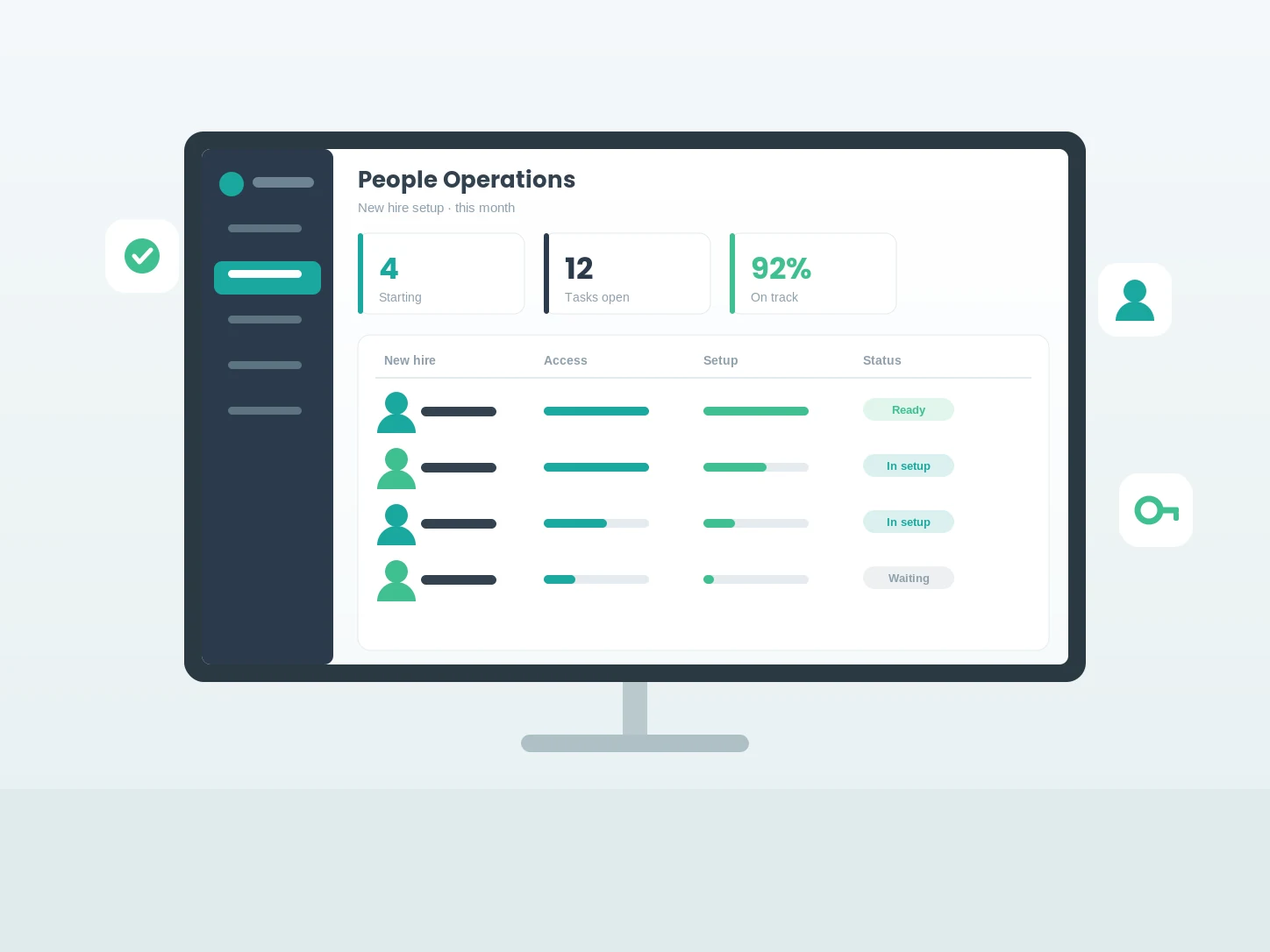
The first few weeks generate a surprising amount of cross-team activity: hardware requests, system access, policy acknowledgements, training sessions, and introductions to the work in flight. When each of those lives in its own inbox or spreadsheet, no single person can see whether the new hire is actually ready to start. A connected record keeps the status, owner, and next action in one place, so progress is visible instead of assumed.
Connected onboarding records help teams:
- Keep tasks, approvals, access, and documents attached to each new hire
- Reduce duplicate check-ins across people, IT, and the hiring manager
- See where a start is stalling before the first week is lost
Where new hires usually feel the difference first:
- 01 - Setup feels prepared because equipment and access are ready on day one, not requested on day one.
- 02 - Context arrives with the work because handoffs carry background, not just a calendar invite.
- 03 - Early tasks have clear owners, so the new hire knows who to ask instead of guessing.
The aim is not to script every minute of someone's first month. It is to connect the moments where onboarding crosses teams. People operations, IT, finance, and the hiring manager can keep their own tools while sharing the record that matters: who is starting, what they need, what is approved, and what is still open.
Clear ownership protects the first project
Most new hires want to do real work quickly, and most stall not from lack of effort but from lack of a clear first handoff. When the introduction to a project carries the background, the current status, and the person to ask, a new hire can pick up momentum instead of waiting for someone to have time to explain. When it does not, the early days fill with small blockers that quietly push the productive start later and later.
This matters most when onboarding touches several teams at once. A single start can create an IT setup task, a finance step for payroll and equipment, a compliance acknowledgement, and a manager's enablement plan. If each team tracks its part separately, the business ends up with several partial views of whether the person is actually ready. If those records connect, readiness becomes something everyone can see rather than something the new hire has to prove.
The payoff is faster contribution and less drag
Connected onboarding does not remove the human side of starting a job; it protects it. When the logistics are handled in a shared workflow, managers can spend their time on coaching and context instead of confirming whether an account was created. New hires can focus on learning the work instead of assembling their own setup from scattered messages.
For growing teams, this is more than a smoother first week. Every start that reaches productivity sooner is capacity the business gains earlier, and every start that drags is hiring effort that takes longer to pay off. When onboarding tasks, access, and people data stay connected, the organization turns a stressful scramble into a reliable operating rhythm, and new hires get to do the work they came to do.